We had a walking tour booked for today which would have been perfect had the temperature not expected to get to 38 degrees. Fortunately the guide contacted me overnight and we decided to do the walking bit first thing in the morning and then do have a car drive us to other key locations in the afternoon.
We started at the Volksgarten park which is the “Peoples Park” right in the center of Vienna. It has a huge rose garden as well as a statue decidated to Empress Elisabeth (“Sisi”). It is quite different to other royal statues as she is sitting with a book and surrounded by roses and her 2 dogs. Moreover the statue is in a quiet, secluded part of the park personally chosen by Emperor Franz Joseph I to reflect the empresses’ lifelong disdain for public scrutiny and crowds.

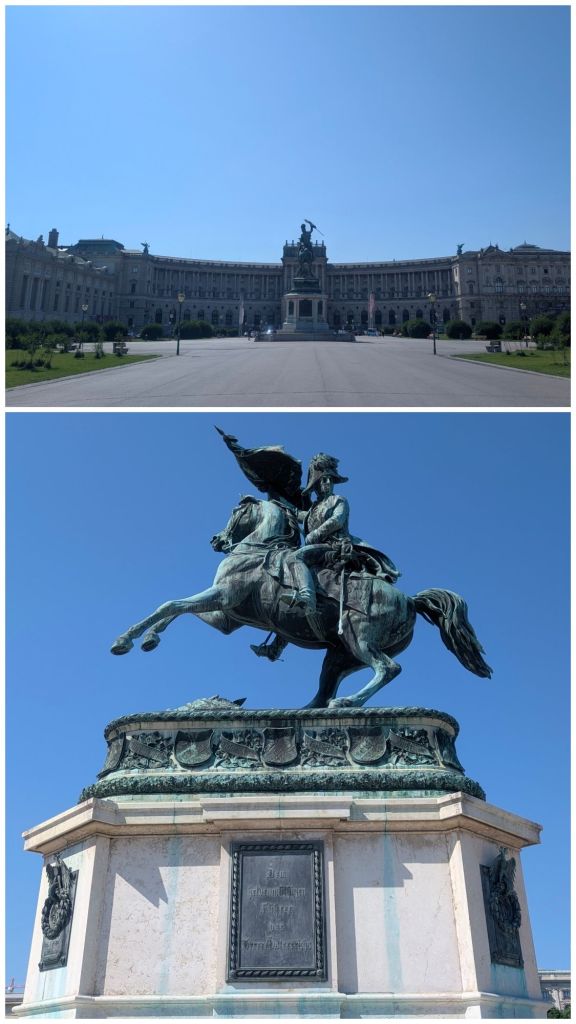
From there we walked to the Heldenplatz (Heroes Square) which houses the Hofburg Palace. The palace was meant to be replicated at the other side of the park, however WWI broke out and it was never completed. There is a central statue dedicated to Archduke Charles which depicts him on horseback celebrating his victory at the Battle of Aspern-Essling where he defeated Napoleon. This was the first time Napoleon was personally and decisively defeated in a major field battle.
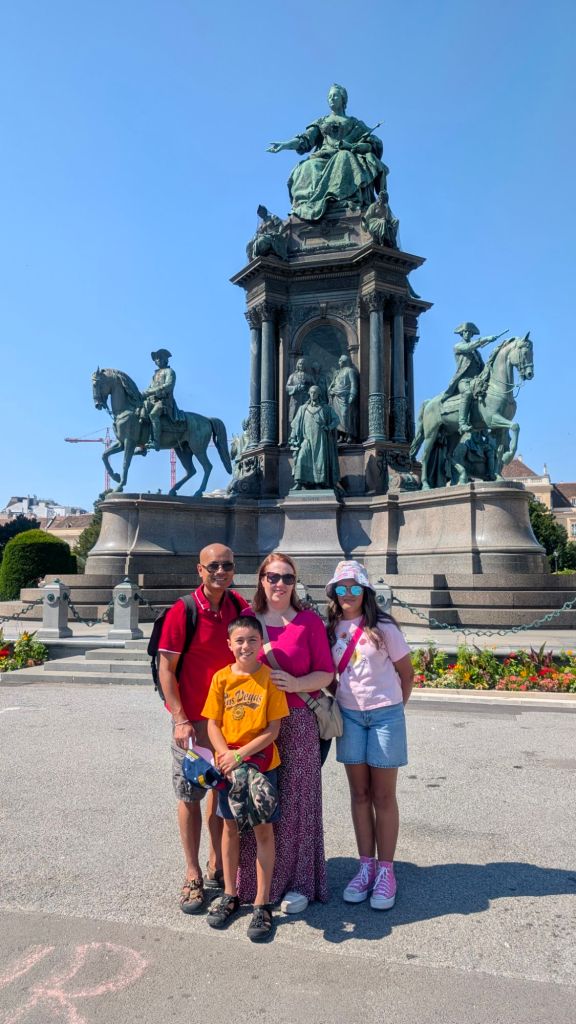
We walked through the main gateway which was very reminiscent of the Pall Mall and headed across the road to see the statue of Empress Maria Theresa who was the only female ruler of the monarchy and reigned from 1740-1780. The massive statue includes all her key advisors and key dignitaries. It also includes a sculpture of a 9 year old Mozart.
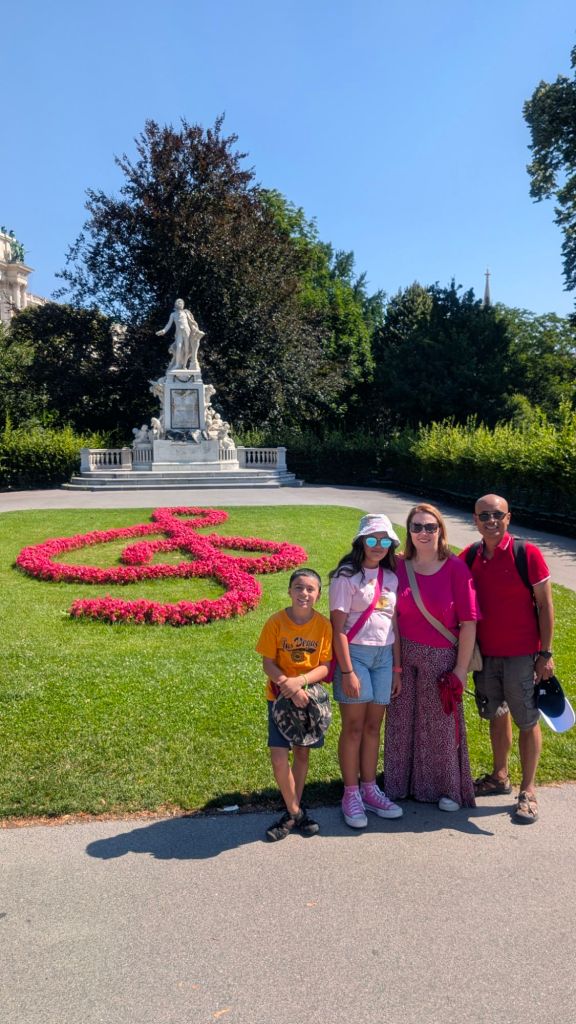
Speaking of Mozart we walked past a statue and park that had been created to honour him. He was the first musician who went “freelance” as before him most composers were the employees of wealthy families. He also performed for the Queen at the age of 9 and was recognized early as a prodigy. We walked along the Opera House where he was the first performer when it was opened.
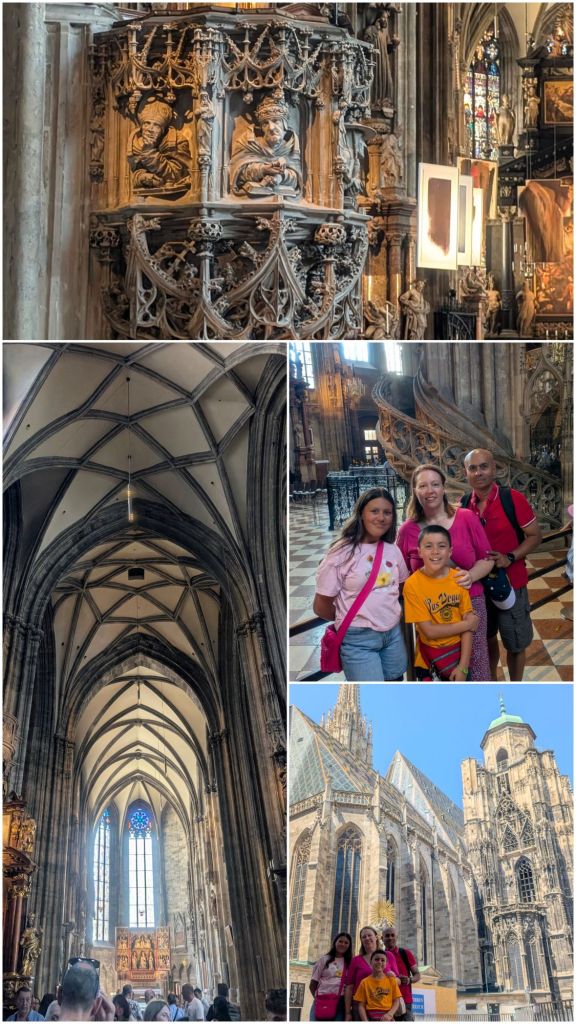
We walked along the memorial for victims of the 2nd world war which was created on a site where 300 individuals perished in the bomb shelter and their bodies were never recovered. Almost a third of Vienna was damaged in the war and fortunately most of the major sites were unaffected. We entered the Augustinian Church which is a Gothic-style church built in the 1300s. It was famous for hosting royal weddings including that of Emperor Franz Joseph and Empress Elisabeth (Sisi). We ended up back at St Stephen’s Cathedral that we had briefly viewed yesterday. We went into the cathedral and it was different to any other I have ever visited. It was dark and almost brooding and the stone masonry was exquisite.
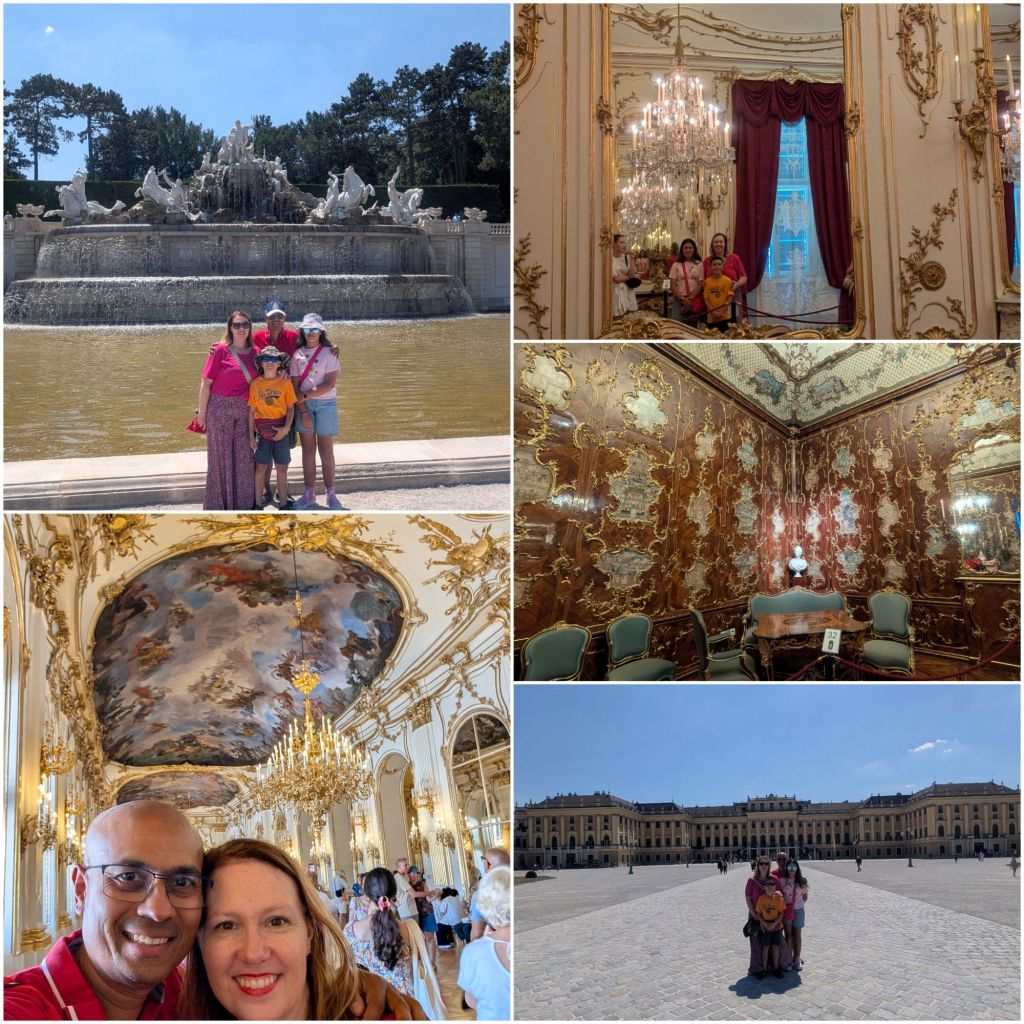
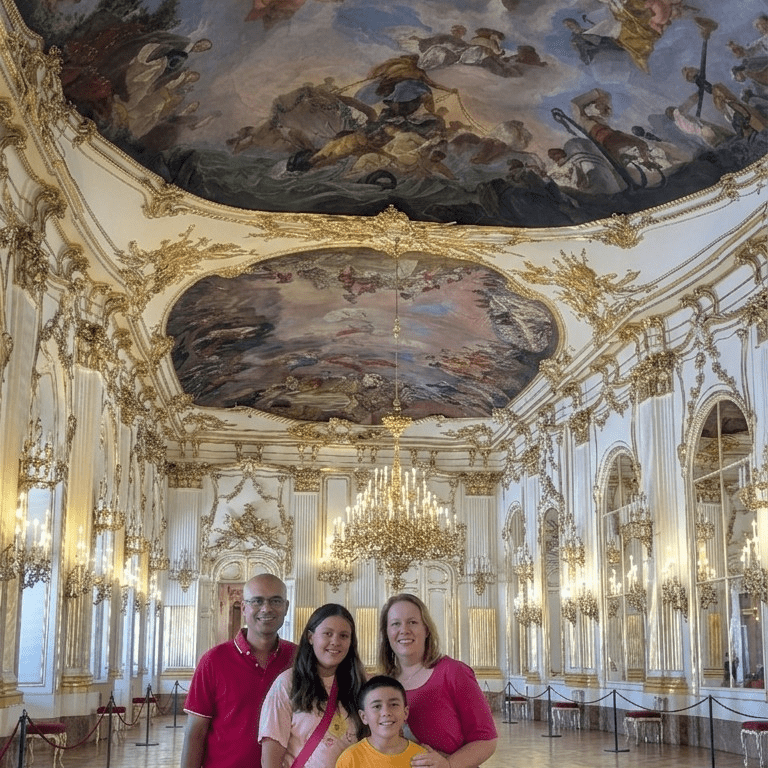
Our final stop was the Schönbrunn Palace which is the main summer residence of the Habsburg rulers. The name Schönbrunn (meaning “beautiful spring”) has its roots in an artesian well from which water was consumed by the court. The history of the 1,441-room Baroque palace and its vast gardens spans over 300 years. We wandered the gardens and as we walked around the back were awestruck by the Gloriette up on the hill. It is a triumphal arch set above the Neptune fountain – which in itself was majestic. We entered the Palace and spent the next hour working our way through its rooms – each more grand than the previous. This included the Great Gallery, which used to be the main entrance to greet dignitaries, and includes a 43 x 10 m mural along its roof split into 3 sections depicting peace, war and the royalty. There was also a porcelain room, blue Chinese room, the Emperors living quarters, Rich Room (which included the state bed) and also the hidden staircase that the Empress used to escape the palace. I don’t think the photos really do justice to how ostentatious the rooms actually were.